

What Group Therapy Can Teach Therapists
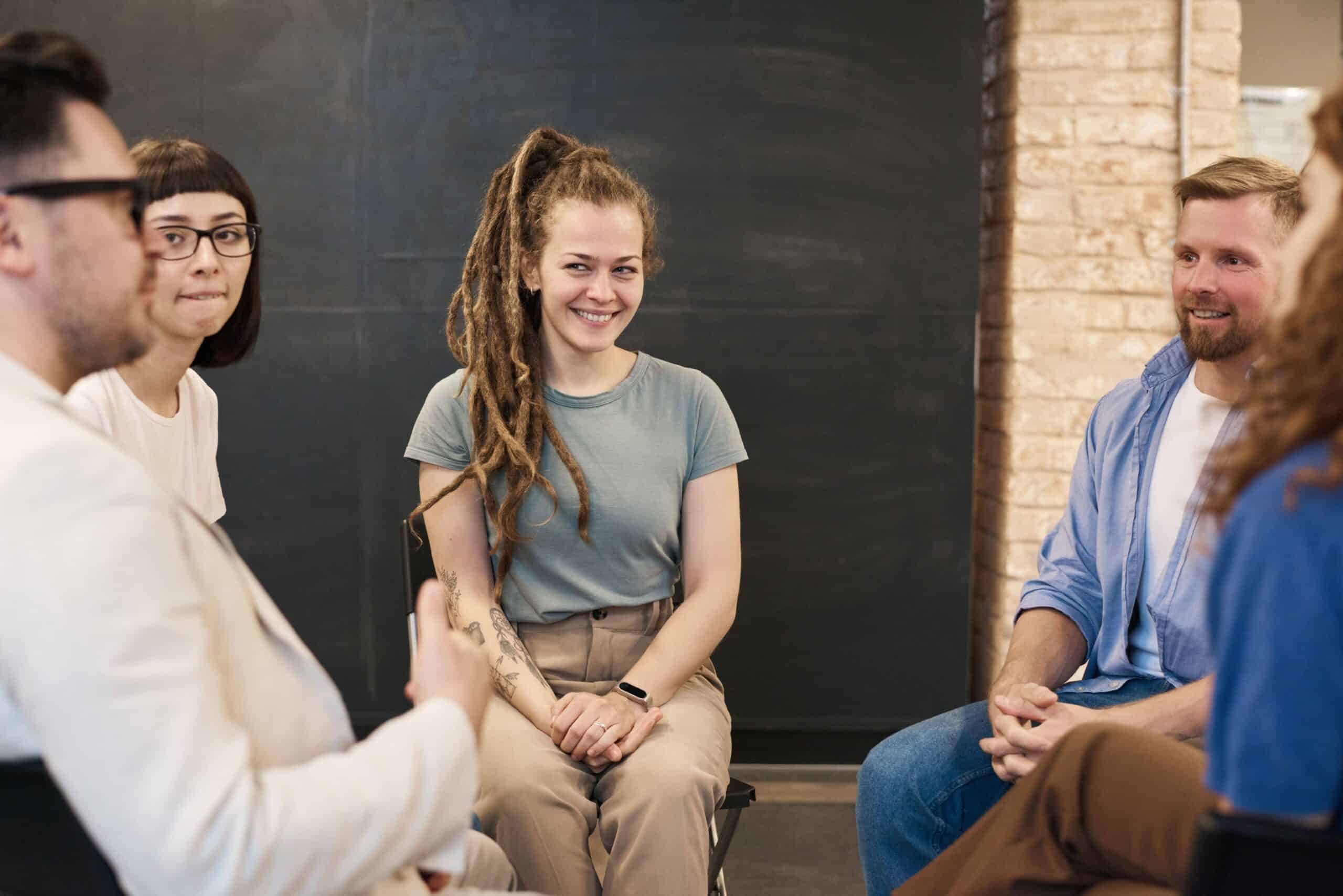
What Group Therapy Can Teach Therapists
Written by Daniel Goldstein, PhD, CGP
As therapists, we spend much of our professional lives helping people understand what happens between us and other people. We study attachment, conflict, vulnerability, boundaries, and repair. We listen closely for the relational patterns shaping our clients’ lives. Yet most therapists receive surprisingly little opportunity to examine those same patterns as they unfold in our own relationships with peers. An interpersonal process group offers one of the clearest ways to do that.
In an Interpersonal Process Group, therapists move beyond studying relationships from the outside. They experience, in real time, how they seek connection, respond to feedback, manage conflict, and protect themselves when they feel vulnerable.
Despite the deeply relational nature of psychotherapy, this kind of experiential learning remains a relatively small part of most therapists’ training and professional development.
Why?
Most clinicians receive limited exposure to group therapy in graduate school. A program may offer one course, sometimes accompanied by a brief mock group with classmates. That can provide a useful introduction to group dynamics and leadership, but it is very different from participating in an ongoing interpersonal process group.
The relational patterns that matter most in group therapy rarely emerge during a short classroom exercise. Our characteristic ways of seeking closeness, responding to conflict, managing vulnerability, receiving feedback, and protecting ourselves take time to become visible. They emerge gradually, as trust develops and the relationships begin to carry emotional weight.
Many therapists complete their training without ever participating in a well-led interpersonal process group, much less receiving substantial training in how to lead one. There are practical reasons for this. Individual therapy is often easier to schedule, easier to bill for, and more fully integrated into the structure of most practices and training programs.
Those explanations are valid. I am not sure they are sufficient.
Over the years, I have increasingly wondered whether the marginal role of group therapy reflects something larger about the culture surrounding psychotherapy. Although our work is deeply relational, our profession has largely adopted a framework that prioritizes the individual over the collective, expertise over mutual influence, privacy over shared experience, and productivity over presence.
We often imagine psychological growth as something that happens one person at a time, behind a closed door, with the guidance of a knowledgeable professional. Group therapy introduces another possibility: that many of the capacities we value most are developed, tested, and transformed in relationship with other people.
This is not an argument against individual therapy. Individual therapy is one of the most powerful forms of treatment our profession offers, and for many people it is exactly what they need. It is an argument that we may underestimate the forms of learning and change that can occur only in the presence of others.
The irony is difficult to miss. Therapists spend their professional lives helping people understand their relationships, yet much of our own training takes place outside of sustained relationships with peers.
We study attachment, conflict, shame, vulnerability, boundaries, transference, countertransference, and emotional development. We become skilled at conceptualizing interpersonal dynamics. Comparatively little of our professional development asks us to examine those same dynamics as they unfold among people who are experiencing us directly.
That is a meaningful omission, both for therapists and for the people we serve.
What Is an Interpersonal Process Group?
An interpersonal process group is a form of group therapy that focuses on what happens between members in the present moment.
Members may discuss experiences from outside the group, but the group also pays close attention to the relationships developing within the room. Members are encouraged to notice their emotional responses, share how they experience one another, and explore patterns of closeness, distance, conflict, vulnerability, and repair as they occur.
For therapists, this creates a distinctive kind of learning environment. Rather than only discussing clinical relationships, therapists have the opportunity to experience themselves as participants in a living relational system.
The goal is not to perform well, demonstrate expertise, or offer the most insightful interpretation. The work involves becoming more aware of how we affect others, how we respond when relationships feel uncertain, and what we do when we want connection but also feel a need to protect ourselves.
The Hidden Curriculum of Therapist Training
Every profession has a hidden curriculum. In addition to what is formally taught, trainees absorb implicit messages about what competence looks like and how a professional is expected to behave.
Therapists learn to observe carefully, formulate cases, tolerate ambiguity, understand theory, and think deeply about other people’s lives. These are essential capacities.
We may also become accustomed to occupying the role of observer rather than participant. Or we can become more comfortable understanding relationships than allowing ourselves to be affected by them. We learn how to help other people know themselves and become known, while receiving much less guidance about what it means to let ourselves be known.
This is not necessarily intentional. It is partly a consequence of how psychotherapy training has developed. Individual therapy became the dominant model, and our educational systems grew around it. Supervision commonly focuses on what happened between therapist and client. Continuing education often emphasizes models, interventions, and research findings.
All of this is valuable. It expands what we know. It does not always deepen our awareness of who we are in relationship.
At some point, most therapists discover that knowledge alone is not enough.
We can understand attachment theory and still become defensive when someone offers difficult feedback. Or we can teach emotional regulation while struggling to remain emotionally available during conflict. We can identify dependency in a client while remaining less aware of our own desire to be admired, needed, or seen as competent.
These are not signs of failure. They are reminders that therapists live within the same relational world as everyone else.
Our training does not remove our interpersonal patterns. Ideally, it helps us become more aware of them.
Our Interpersonal Blind Spot
Therapists often assume that self-awareness develops primarily through introspection. Reflection matters, and individual therapy can produce profound insight. But introspection has limits because some aspects of the self are inherently interpersonal.
I cannot fully understand what it is like to be in relationship with me by thinking more carefully about myself.
There are qualities of my presence, impact, and way of relating that become visible only when another person experiences them and responds. I learn something important when someone tells me that I seem intimidating despite my intention to be welcoming, or distant when I believe I am engaged.
I learn something different when I recognize that I routinely withdraw after conflict, assume too much responsibility for other people’s feelings, become overly accommodating, or move into an expert role when I feel uncertain.
These discoveries are not simply cognitive. They arise through experience.
An interpersonal process group creates the conditions in which these patterns can become visible. Rather than only talking about relationships, members participate in relationships with one another.
Closeness, misunderstanding, attraction, disappointment, competition, envy, gratitude, resentment, affection, and repair emerge naturally because they are part of human relationships. Group members can begin to examine these experiences while they are happening rather than only describing them after the fact.
Process Groups Offer Therapists Experiential Learning About Themselves & Others
This is one of the reasons process groups offer something distinctive to therapists. Reading about interpersonal dynamics and experiencing them are fundamentally different forms of learning. Both matter, but they do not accomplish the same thing.
It also explains why a brief classroom group, however valuable, cannot fully substitute for an ongoing interpersonal process group.
Most people do not reveal their deepest relational patterns during the first few meetings. Early group sessions are often marked by politeness, uncertainty, self-consciousness, and a desire to make a favorable impression.
Over time, the relationships begin to matter. Feedback carries more emotional weight. Conflict becomes more meaningful. Longings for acceptance, fears of rejection, struggles with authority, discomfort with dependency, and habitual forms of emotional protection become easier to recognize.
The depth of the work depends not only on the group format, but also on the continuity of the relationships within it.
Why Therapists May Hesitate to Join a Process Group
If process groups offer so much, why do relatively few therapists seek them out?
One reason may be that a process group asks us to step outside a role that has become familiar and professionally reinforced.
In the therapy room, we are responsible for observing, understanding, containing, and facilitating. In a process group, we become members. Our feelings, reactions, defenses, and interpersonal patterns become part of the work.
That shift can feel unexpectedly vulnerable.
Professional knowledge offers less protection in a process group. Other members are not primarily interested in whether we understand attachment theory or can offer a useful interpretation. They are interested in what it is like to be in relationship with us.
Participants may notice when we withdraw, intellectualize, over-function, avoid conflict, become defensive, seek approval, or struggle to express disappointment. They may also experience our warmth, generosity, humor, curiosity, steadiness, and capacity for closeness.
This can be unfamiliar territory, particularly for people who are accustomed to being the helper.
During the American Group Psychotherapy Association’s intensive process-group institutes, I have often watched therapists initially rely on familiar professional habits. They ask thoughtful questions, offer interpretations, or make themselves useful to other members.
These responses are understandable. They are often genuine attempts to connect. They can also allow a person to remain somewhat protected from being known.
When another member expresses frustration, or the group leader invites the therapist to speak more directly from personal experience, something important often changes. The therapist becomes more emotionally present. Other members feel more connected to them. The group becomes safer because the interaction becomes more mutual.
The vulnerability is not an unfortunate side effect of process-group participation. It is part of what makes the experience valuable.
Before we are therapists, we are people. Our effectiveness depends not only on what we know, but also on how we participate in relationships.
What Can Therapists Learn in a Process Group?
The specific experience will differ for every therapist, but an ongoing process group can help clinicians develop greater awareness in several important areas.
Their Interpersonal Impact
Our intentions and our impact are not always the same. A therapist may intend to appear thoughtful but be experienced as distant, intend to be helpful but be experienced as controlling, or intend to give others space but be experienced as disengaged.
A process group allows therapists to receive direct, thoughtful feedback about how others experience them.
Their Responses to Conflict and Feedback
Many of us have predictable ways of responding when we feel criticized, misunderstood, excluded, or disappointed. We may withdraw, explain, accommodate, become defensive, over-function, or try to restore harmony too quickly.
Recognizing these patterns can help therapists remain more present when tension emerges in clinical relationships.
Their Strategies for Seeking Connection
Some people move toward others quickly. Others wait to be invited. Some become useful, entertaining, agreeable, or intellectually impressive. Others hold back until they feel certain they will be accepted.
A group can help therapists notice how they pursue closeness and what makes emotional risk feel possible or dangerous.
Their Capacity for Rupture and Repair
Misunderstandings are inevitable in meaningful relationships, including therapy relationships. Process groups allow therapists to experience conflict without assuming the relationship must end.
Members can practice naming tension, hearing another person’s perspective, taking responsibility for their impact, and remaining engaged long enough for repair to occur.
Their Ability to Remain Emotionally Present
Therapists regularly sit with uncertainty, pain, disappointment, anger, dependency, and longing. A process group can strengthen the capacity to stay emotionally engaged without immediately retreating into explanation, reassurance, problem-solving, or professional expertise.
These capacities are not separate from clinical skill. They shape how clinical skill is received.
Why This Matters Clinically
The longer I practice, the less I think of therapists primarily as people who deliver interventions.
Interventions matter, of course. Our field has developed many thoughtful and effective approaches to psychological treatment. But every intervention is filtered through the person offering it.
Our ability to tolerate uncertainty, remain emotionally present, recognize our interpersonal impact, repair misunderstandings, and stay engaged when a relationship becomes difficult shapes every hour of therapy we provide.
These are not secondary or “soft” skills. They are central clinical capacities.
Interpersonal process groups cultivate these capacities in ways that lectures, books, and even excellent supervision cannot fully replicate. They ask therapists to engage in some of the same work we ask of our clients: to become more aware of themselves in relationship, risk greater honesty, remain curious about their impact, receive feedback without immediately defending against it, and tolerate the uncertainty that meaningful intimacy often requires.
Not every therapist needs to become a group therapist. However, I do believe that every therapist can benefit from a deeper understanding of how they participate in relationships. Participation in a therapy group or training group offers one of the most direct ways to develop that awareness.
This is not only personal growth. It is professional development.
A Different Vision for Therapist Development
What might change if participation in an interpersonal process group became a routine part of therapist development rather than an unusual elective?
We might develop therapists who are more comfortable with conflict, more aware of their interpersonal impact, less professionally isolated, and better able to repair relational ruptures.
We might see therapists who are more willing to acknowledge uncertainty and more capable of remaining emotionally present when the therapeutic relationship becomes strained.
It might also change how our profession understands psychotherapy itself.
For decades, group therapy has often been viewed as a specialty, a secondary treatment, or a less expensive alternative to individual therapy. That perception may tell us less about the clinical value of group therapy than it does about the assumptions our culture makes about healing.
In a society that prizes independence, expertise, self-sufficiency, and individual achievement, it is perhaps unsurprising that a treatment grounded in mutual influence, emotional interdependence, and community has remained closer to the margins.
Human beings do not become who they are in isolation. From the beginning of life, we are shaped by our relationships. Many of our most enduring wounds develop within relationships, and many of our most significant opportunities for growth also occur within them.
That may be the broader lesson group therapy has to offer.
Therapists’ Relationships Strengthened In Interpersonal Process Groups
Relationships are not merely one topic among many in psychotherapy. They are one of the primary contexts in which psychological change occurs.
If that is true, group therapy deserves a more central place in the education and development of therapists. Not because it is superior to individual therapy, but because it teaches something that individual therapy cannot teach in quite the same way.
It reveals the interpersonal world we help create around us. Group invites us to become more conscious participants in that world. It reminds us that therapists, like our clients, continue to grow through relationships.
Perhaps the most important question is not simply why more therapists do not participate in group therapy.
The larger question is why we have organized so much of psychotherapy around the assumption that the individual, rather than the relationship, is the primary location of change.
Changing that culture begins with therapists becoming willing to experience the kind of relational work we routinely ask our clients to trust.
When therapists participate in interpersonal process groups, they deepen their own self-awareness and help build a profession that values relationship as much as insight.
Interpersonal Process Groups for Therapists at Nashville Psych
For therapists who are curious about group therapy, the next step is straightforward: experience a group from the inside.
Before we can confidently describe the potential of group therapy to our clients, it helps to understand what it asks of its members, what it makes possible, and what it feels like to participate.
Nashville Psych offers interpersonal process groups and training groups for therapists and other mental health professionals. To learn more or schedule a group screening, contact Client Care at clientcare@nashvillepsych.com, 615-582-2882, or schedule a quick call.
 About the Author
Daniel Goldstein, PhD, CGP, is a licensed psychologist, Certified Group Psychotherapist, and co-founder and Clinical Director of Nashville Psych. He specializes in interpersonal and modern psychoanalytic group psychotherapy and has extensive experience leading interpersonal process groups for adults and mental health professionals. He is also developing training opportunities designed to help therapists deepen their understanding of group process, relational dynamics, and the therapeutic use of self.
Frequently Asked Questions About Process Groups for Therapists
What is an interpersonal process group for therapists?
An interpersonal process group is a therapy or experiential training group that helps therapists better understand how they relate to other people. The group pays particular attention to what happens between members in the present moment, including patterns involving closeness, vulnerability, conflict, feedback, emotional distance, and repair.
Rather than only studying relational dynamics, therapists experience and examine those dynamics as they naturally emerge within the group.
How is a process group different from group supervision?
Group supervision generally focuses on therapists’ clinical work with their clients. Members may discuss cases, clinical decisions, ethical concerns, countertransference, or treatment approaches.
An interpersonal process group focuses more directly on the relationships among the group members themselves. The therapist participates as a member rather than primarily presenting cases or receiving professional guidance.
Both experiences can support clinical development, but they serve different purposes.
Is a process group the same as group therapy?
An interpersonal process group is a form of group therapy. It may also be offered as part of an experiential training program for therapists.
The exact structure depends on the group, its purpose, and the leader. Some groups emphasize members’ personal growth, while training groups may more explicitly connect the experience to clinical development and group leadership.
Therapists considering a group should ask whether it is primarily a therapy group, an experiential training group, or a combination of the two.
Do I need to be a group therapist to benefit from a process group?
No. Process groups can be valuable for therapists who work with individuals, couples, families, or groups.
The experience can help clinicians become more aware of their interpersonal impact, responses to conflict, ways of managing vulnerability, and capacity to remain emotionally present. These relational capacities influence therapy across treatment formats.
Can a process group help me become a better individual therapist?
A process group can strengthen capacities that are central to individual therapy, including recognizing relational patterns, receiving feedback, tolerating uncertainty, navigating ruptures, and remaining engaged when a therapeutic relationship becomes difficult.
It does not replace clinical training, supervision, or individual therapy. It offers a different kind of experiential learning that can complement each of them.
Why is ongoing participation important?
Relational patterns usually take time to emerge. During the early stages of a group, members may be polite, cautious, or focused on making a positive impression.
As trust develops and the relationships become more meaningful, recurring patterns around closeness, conflict, approval, authority, vulnerability, and emotional protection often become more visible. An ongoing group provides time for members not only to recognize these patterns but also to experiment with different ways of relating.
Are process groups confidential?
Interpersonal process groups are generally built around a clear expectation of confidentiality, but the specific agreement should be reviewed before joining.
Group leaders typically explain the limits of confidentiality, expectations for members, communication outside the group, and any additional considerations that apply when members are therapists or work within the same professional community.
Is a process group appropriate for therapists who already participate in individual therapy?
It can be. Individual therapy and interpersonal process groups offer different relational experiences.
Individual therapy provides focused attention within a relationship between a therapist and client. A process group gives members the opportunity to understand themselves within multiple relationships at the same time and to receive feedback from several people who experience them differently. Many therapists find that the two forms of therapy complement one another.
How do I know whether a process group is a good fit?
Most process groups begin with a screening or consultation. This gives the prospective member and group leader an opportunity to discuss the group’s purpose, structure, expectations, confidentiality, and current membership.
It is also a time to consider what the therapist hopes to gain from the experience and whether the particular group can support those goals.
Does Nashville Psych offer process groups for therapists?
Yes. Nashville Psych offers interpersonal process groups and experiential training opportunities for therapists and other mental health professionals.
To learn more about current offerings or schedule a group screening, contact our Client Care Team at clientcare@nashvillepsych.com or 615-582-2882, or schedule a quick call with Client Care.
Related Links:
Interpersonal Process Group Therapy at Nashville Psych
The Healing Power of Being Seen: What Neuroscience Reveals About Group Therapy
8 Reasons To Join A Brand New Interpersonal Process Group